


Following the successful breeding of its first flamingo chicks in 2025, Saigon Zoo has welcomed three more chicks this year. The first chick hatched on August 25th and is now in good health, approximately five times its original size, and has begun to forage for food with its mother. The other two chicks remain in the nest and are cared for daily by their parents.
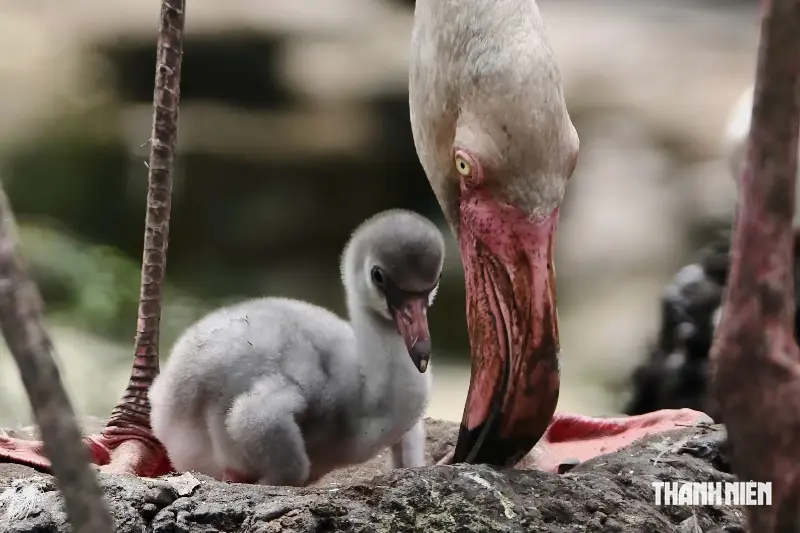
The zoo has just welcomed three baby flamingos.
PHOTO: NI NA
According to Mr. Lam Quoc Cuong, Head of the Bird and Primate Team at the Saigon Zoo Animal Enterprise, the first flamingo cub to successfully breed there in 2025 will be named "Go". Three more cubs to be born in 2026 will be named "To", "The", and "Zoo".
Both the male and female flamingos produce milk to feed their young.
Around 1999, Saigon Zoo brought in about 20 flamingos, and in 2017 they imported another 20, bringing the current flock to about 30. According to Mr. Cuong, flamingos have a gregarious nature, and a group of 20-30 individuals is necessary to stimulate breeding.
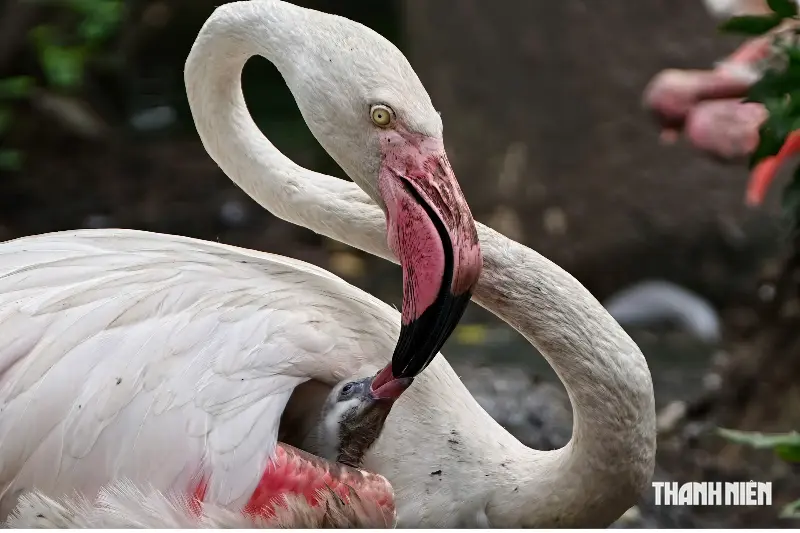
In their early days, flamingo chicks cannot forage for themselves and are cared for by their parents with a bright red "crop milk." This distinctive color leads many to mistakenly believe that the parent birds are feeding their offspring with blood.
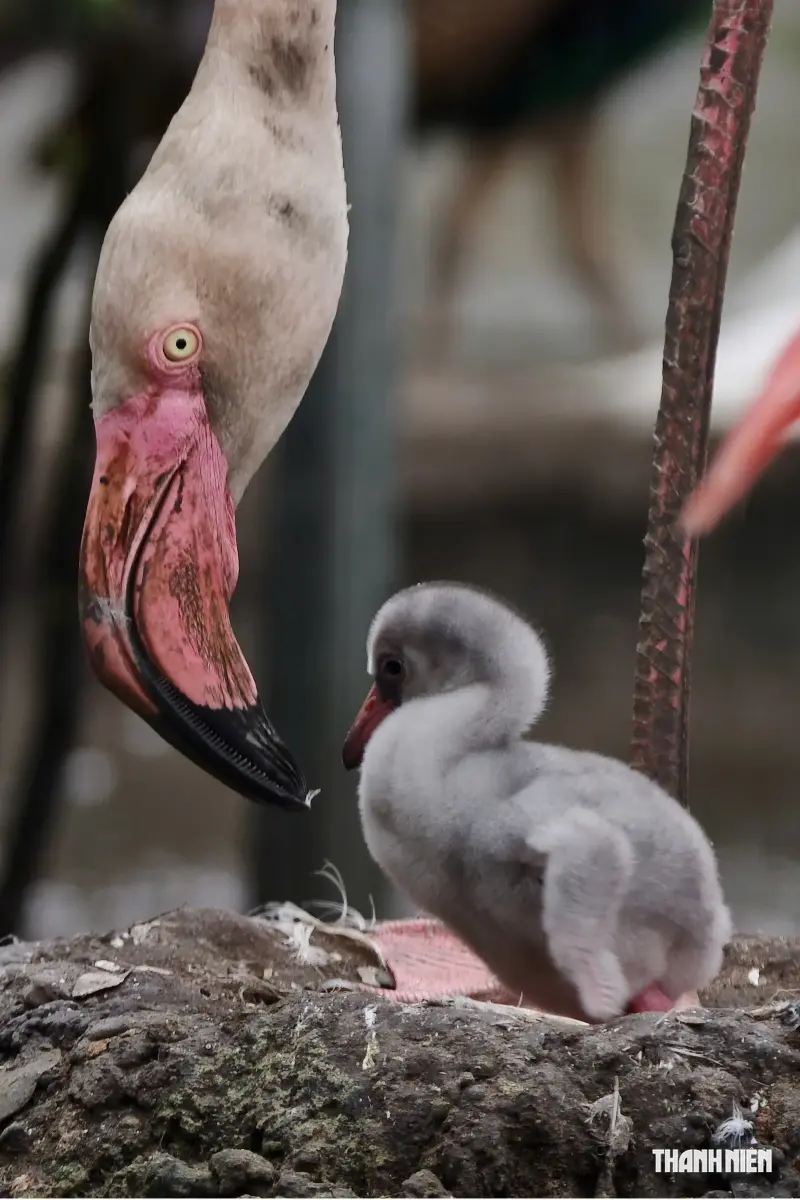
Parent birds are able to identify their chicks through sound.
PHOTO: NI NA
According to Mr. Cuong, this red substance is not blood but "crop milk." Notably, both parent flamingos can secrete "crop milk" to feed their young. During this time, the chicks receive food from their parents while gradually learning to eat on their own. Staff must closely monitor each chick's eating habits and droppings to adjust their nutrition accordingly.
Flamingo parents are also capable of accurately recognizing their own offspring. Within the flock, parent birds and chicks identify and find each other through sound. Flamingos do not raise chicks from other pairs. If a chick is abandoned by its parents, caregivers must intervene.
Around six months old, flamingo chicks can be separated from their parents, no longer fed crop milk, and begin to eat independently. Flamingo caretakers say that one of the most difficult stages in caring for them is when the chicks begin to leave the nest and start eating with their parents.
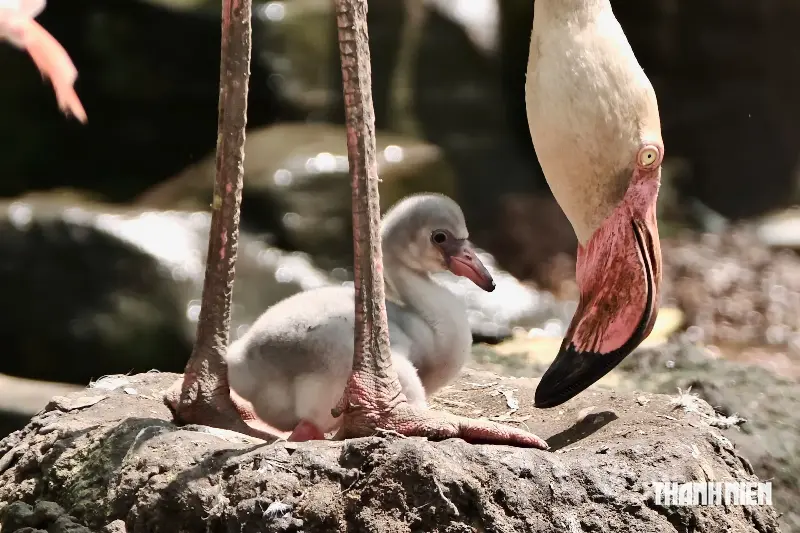
Flamingos care for their young until they are about 6 months old.
PHOTO: NI NA
According to the flamingo caretaker at the zoo, when there are chicks, the water level in the pond must be adjusted accordingly. The water needs to be sufficient for the adult flock but not too deep, to avoid causing difficulties for the chicks that have just left the nest.
To facilitate flamingo mating and breeding, caretakers gradually improve the environment, create suitable mudflats, expand nesting grounds, and create sounds that mimic the flock's activity during the breeding season.
At the beginning of the breeding season, flamingos begin performing "dances" to choose mates. Once they find a partner, the two birds pair up and stay together throughout the breeding season. However, they don't necessarily stay together for life. In the following breeding season, flamingos may choose the same partner again or pair up with a different individual.
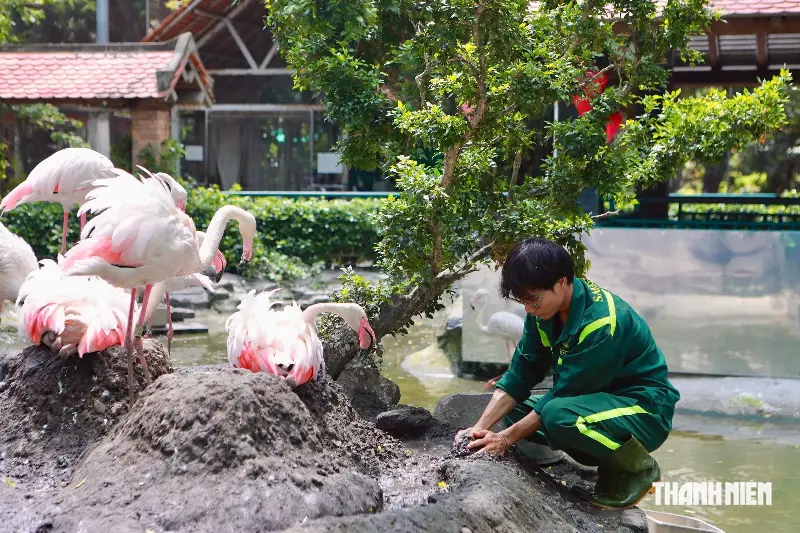
The water in the flamingo enclosure is changed daily, but a layer of moss is kept to protect the birds' feet.
PHOTO: NI NA
2025 marks the first successful breeding of flamingos at Saigon Zoo after more than 20 years of raising them. Of the five eggs laid this breeding season, one hatched successfully. This year, more eggs have developed embryos, and so far, three chicks have been born.
They build "volcano" nests and lay only one egg each season.
Flamingos breed differently from many other bird species. Instead of nesting in trees or hollows, flamingos use mud and soil to build their own nests. These nests are shaped almost like small volcanoes, about 40 cm wide and 50 cm high.
"Each pair of flamingos lays only one egg per breeding season. After about 28 days of incubation, the chick will hatch. At times, the flock becomes highly agitated, leading to competition for nests. Staff have to build additional nests and expand the nesting area to create space for the pairs. Some flamingos breeding for the first time lack experience and drop their eggs. In such cases, staff have to gently return the eggs to the nest," Mr. Cuong recounted.
Three more flamingos hatched at the zoo.
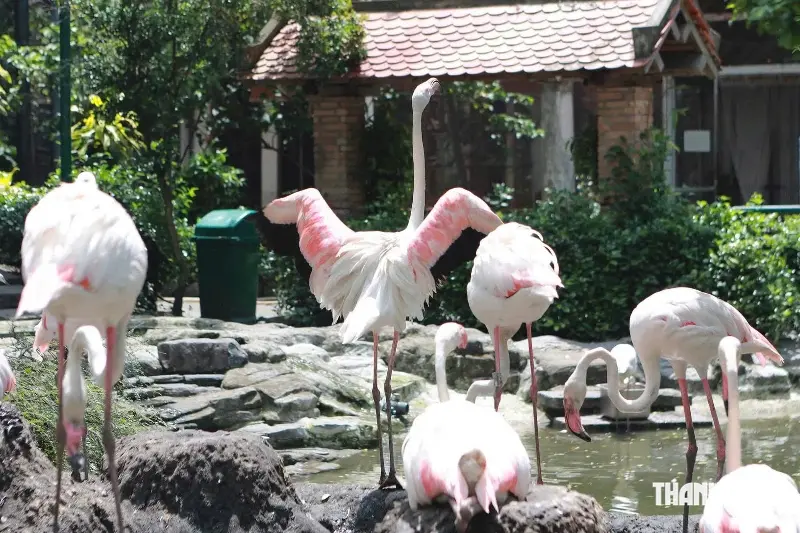
The flamingo flock at the zoo has about 30 birds.
PHOTO: NI NA
The distinctive pink color of flamingos is related to their diet. In the wild, they feed on red algae and crustaceans with red pigments; these pigments are absorbed and contribute to the color of their plumage. Mr. Cuong described young flamingos as looking "like chickens," and they only reach nearly the size of adults and begin to change color around the age of one year.
For those working at Saigon Zoo, the continuous successful breeding of flamingos is a source of joy after a journey spanning over 20 years. According to Mr. Cuong, this current achievement is a continuation of the knowledge and experience of many people who have researched and cared for the flamingo flock over the years.
The caretaker burst into tears of joy as the baby bird broke out of its shell.
PHOTO: NI NA
Mr. Cuong remembers most vividly the first time a flamingo laid eggs in 2025. Although they knew the incubation period was about 28 days, the caretakers were still anxiously waiting each day until the chicks broke out of their shells.
"Not only the animal caretakers but also the plant caretakers and office staff are delighted. Many researchers have left behind knowledge for us to continue building upon, which has led to this success. This is a blessing and a source of happiness for the Saigon Zoo," Mr. Cuong shared.