


- 1. Overnight oats with berries support vascular function.
- 2. Mixed nuts help reduce atherosclerosis.
- 3. Bean salad is rich in soluble fiber.
- 4. Greek yogurt parfait helps control blood pressure.
- 5. Berry and protein smoothies help lower cholesterol.
- 6. Chia seed pudding is good for cardiovascular health.
- 7. Dark chocolate reduces the risk of high blood pressure.
Choosing snacks that contain nutrients known to be beneficial for cardiovascular health, such as fiber, protein, healthy fats, potassium, and magnesium, may help reduce the risk of heart disease.
Here are some heart-healthy snack suggestions from Jillian Kubala, a certified dietitian in Westhampton, New York ( USA ), that you might consider adding to your daily diet:
1. Overnight oats with berries support vascular function.
Overnight soaked oats are easy to make and a delicious and nutritious snack option. Oats contain soluble fiber called beta-glucan, which helps lower cholesterol. Beta-glucan prevents cholesterol absorption in the digestive tract, increasing the amount of cholesterol the body excretes in stool. Oats can also help lower blood sugar and blood pressure, benefiting cardiovascular health.
Adding antioxidant-rich and fiber-rich berries to overnight soaked oats offers even more cardiovascular health benefits. Research shows that a diet rich in berries can help lower total cholesterol, LDL cholesterol, triglycerides, and blood pressure, while increasing heart-healthy high-density lipoprotein (HDL) cholesterol.
2. Mixed nuts help reduce atherosclerosis.
Nuts are packed with nutrients that are good for cardiovascular health, such as fiber, protein, and healthy fats. Snacking on a mix of nuts is an easy way to take care of your heart health.
Regularly eating nuts can effectively reduce risk factors for cardiovascular disease, such as low-density lipoprotein (LDL) cholesterol, also known as "bad" cholesterol. Studies show that consuming more nuts is associated with a 24% lower risk of coronary heart disease, the most common type of heart disease in the United States.
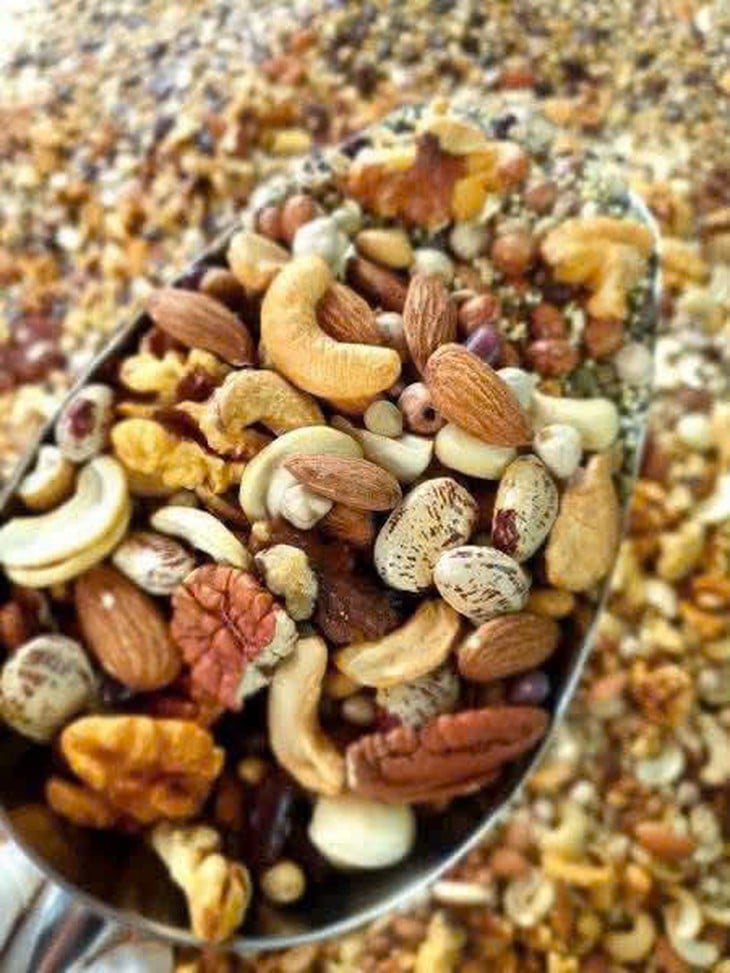
A snack of nuts provides many essential nutrients that are beneficial for cardiovascular health. Photo: Lam Thu.
Among nuts, walnuts provide the highest amount of omega-3 ALA fatty acids, which are beneficial for cardiovascular health. Regularly eating nuts, including almonds, walnuts, cashews, and pistachios, has been shown to lower levels of small, dense LDL cholesterol. This type of LDL cholesterol is closely linked to the development and buildup of plaque (fatty deposits) in the arteries.
3. Bean salad is rich in soluble fiber.
Beans are one of the best foods you can eat to boost cardiovascular health. They are rich in soluble fiber, which binds to cholesterol and prevents it from being absorbed into the bloodstream. Beans also contain many minerals that help lower blood pressure, such as potassium and magnesium.
One study showed that eating one cup of canned mixed beans daily for four weeks significantly reduced total cholesterol by 5.46% and LDL cholesterol by 8.08%. This reduction is equivalent to a 7% decrease in the risk of cardiovascular disease.
4. Greek yogurt parfait helps control blood pressure.
Greek yogurt is a good source of potassium, magnesium, and calcium, all of which play important roles in controlling blood pressure. One study involving 915 people with hypertension showed that those who regularly ate more yogurt had lower blood pressure levels.

Greek yogurt provides nearly twice the amount of protein compared to regular yogurt. Protein is the macronutrient that promotes satiety and can help you feel full between meals, thus helping maintain a healthy weight. In particular, reducing belly and visceral fat is crucial for cardiovascular health.
5. Berry and protein smoothies help lower cholesterol.
Smoothies made with frozen berries, unsweetened protein powder, almond butter, and unsweetened milk or plant-based milk can help you feel full and support cardiovascular health. You can adjust the ingredients based on your taste preferences and health goals.
To further boost your fiber intake and lower cholesterol, consider adding avocado and ground flaxseed.
6. Chia seed pudding is good for cardiovascular health.
Chia seeds are very rich in fiber. A 28g serving contains 9.75g of fiber, accounting for approximately 35% of the daily recommended fiber intake. Studies show that chia seeds can lower total cholesterol, LDL cholesterol, and triglycerides, while increasing heart-healthy HDL cholesterol. Thanks to their high magnesium content, chia seeds may also help lower blood pressure.
Make chia seed pudding by mixing 1 tablespoon of chia seeds with 1 cup of your choice of milk. Refrigerate the mixture for a few hours or overnight to allow the chia seeds to swell and form a gel. Then, top with other heart-healthy ingredients such as nuts and berries.
7. Dark chocolate reduces the risk of high blood pressure.
Dark chocolate contains many anti-inflammatory and antioxidant compounds such as flavonoids, which can improve blood vessel function, prevent blood clots, and lower blood pressure. Flavonoids in dark chocolate may reduce the risk of heart disease by protecting against atherosclerosis and lowering high blood pressure as well as blood lipid levels.
One meta-analysis showed that consuming dark chocolate was significantly associated with a reduced risk of hypertension. Another meta-analysis showed that chocolate may reduce the risk of heart disease when consumed in amounts less than 100g per week.