


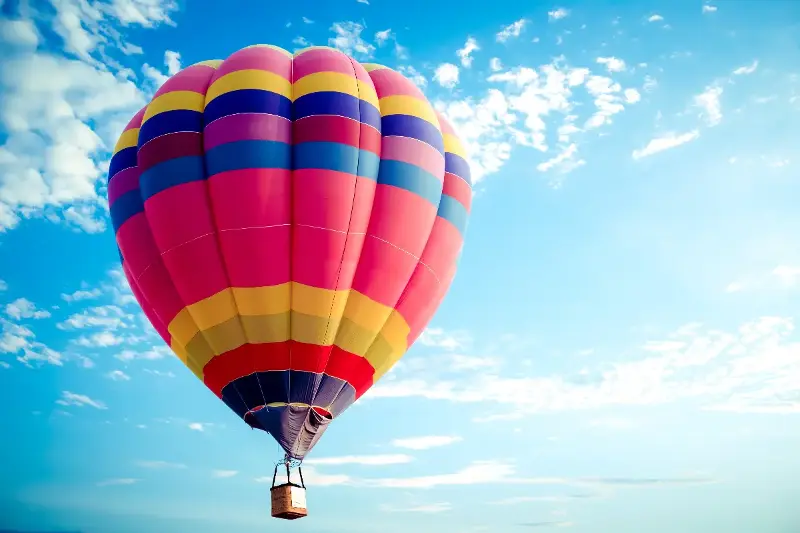
For centuries, people watched smoke rise from fires and wondered if humans might someday follow it into the sky. The hot air balloon turned that dream into reality, becoming the first technology to carry people into the air long before airplanes, helicopters, or rockets. Its core principle remains surprisingly simple: heat air, make it lighter than the surrounding atmosphere, and allow it to lift a large fabric envelope.
The result is one of aviation’s most graceful inventions. A balloon moves seamlessly with the wind rather than fighting it, providing a peaceful, wide-angle view of the world below. Yet behind that serene experience lies a practical demonstration of:
-
Fluid dynamics and atmospheric pressure
-
Thermodynamics and temperature differential
-
Centuries of human curiosity and engineering
The First Historic Flights in France
The modern story of ballooning began in France in 1782 when brothers Joseph-Michel and Jacques-Étienne Montgolfier noticed that heated air trapped inside a fabric bag caused it to rise. They experimented with paper and cloth balloons, using heat from fires to create upward lift.
Progress came remarkably fast through a series of groundbreaking milestones:
-
June 4, 1783: The brothers demonstrated an unmanned balloon in Annonay, France, climbing roughly 2,000 metres and travelling several kilometres.
-
September 19, 1783: A sheep, a duck, and a rooster flew in a balloon at Versailles before King Louis XVI. Their safe 8-minute flight proved living creatures could tolerate altitude and aerial movement.
-
November 21, 1783: Jean-François Pilâtre de Rozier and François Laurent made the first free human flight over Paris, travelling nine kilometres in 25 minutes untethered to the ground.
The Physics of Why Heated Air Rises
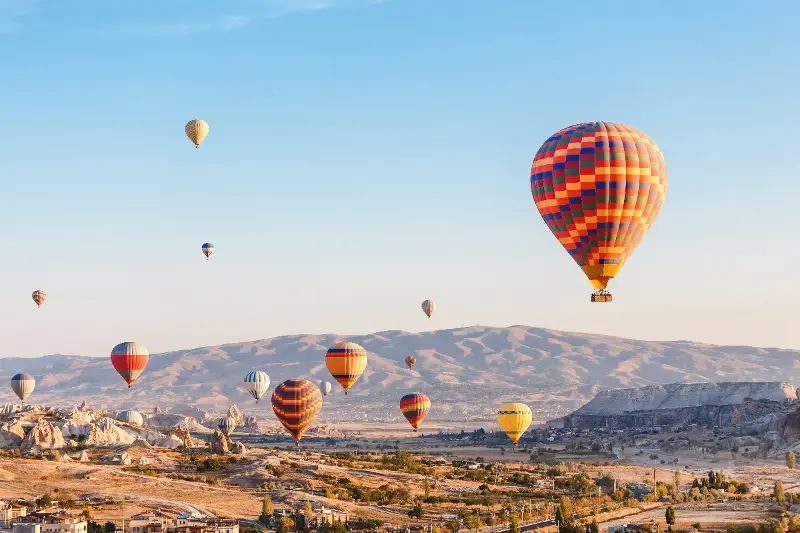
A hot air balloon works because warm air is less dense than cool air. Density describes how much mass is packed into a given volume. When air is heated, its molecules move faster and spread farther apart, meaning the warm air weighs less than the cooler air surrounding it.
The balloon’s envelope traps this warmed air. When the air inside becomes sufficiently lighter than the outside atmosphere, the balloon experiences buoyancy—the upward force described by Archimedes’ principle.
A standard balloon envelope holds between 2,000 and 3,000 cubic metres of air. Heating that volume by 60 to 100 degrees Celsius above ambient temperature creates enough lift to raise the envelope, basket, equipment, and passengers.
Pilots manage flight through precise heat adjustments:
-
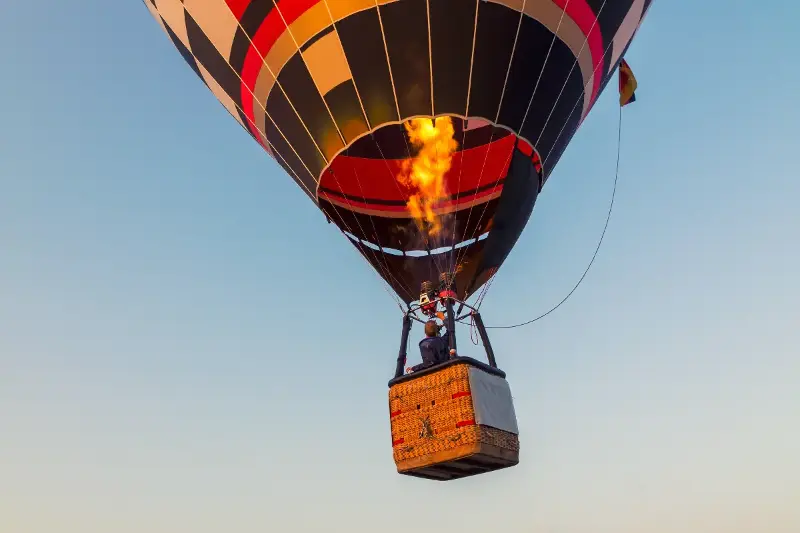
Climbing: Activating the burner sends flames into the envelope, increasing internal temperature and lift.
-
Descending: Allowing the air to cool reduces lift, causing the balloon to gently sink.
-
Rapid Descent: Opening a vent near the top of the envelope releases hot air quickly when needed.
Steering and Navigating with the Wind
Unlike an airplane, a hot air balloon has no engine for forward propulsion and no steering wheel. It travels wherever the wind carries it. However, pilots exercise control by climbing or descending to find air currents moving in different directions at various altitudes.
Mastering flight requires careful preparation and meteorological awareness:
-
Weather analysis: Studying wind forecasts, cloud cover, visibility, and atmospheric stability before takeoff.
-
Optimal timing: Flying shortly after sunrise or in late afternoon when the air is cool and free from turbulent midday heating.
-
Landing execution: Identifying safe open landing areas, avoiding power lines, and bracing passengers for ground contact.

From Historic Spectacle to Modern Sport
In the late eighteenth century, ballooning quickly became an international sensation, inspiring art, fashion, and scientific studies of the upper atmosphere. Over time, early observers also recognized its practical value for elevated observation and mapping.
Today, hot air ballooning is primarily a recreational activity and competitive sport. Pilots participate in precision events, navigating toward specific targets or dropping markers with impressive accuracy.
Major festivals fill the sky with colourful envelopes shaped like animals, landmarks, and traditional spheres. Events like the Albuquerque International Balloon Fiesta in New Mexico draw hundreds of balloons each year, celebrating a remarkable invention that proved aviation began with simple fabric, warmth, and the courage to rise.